

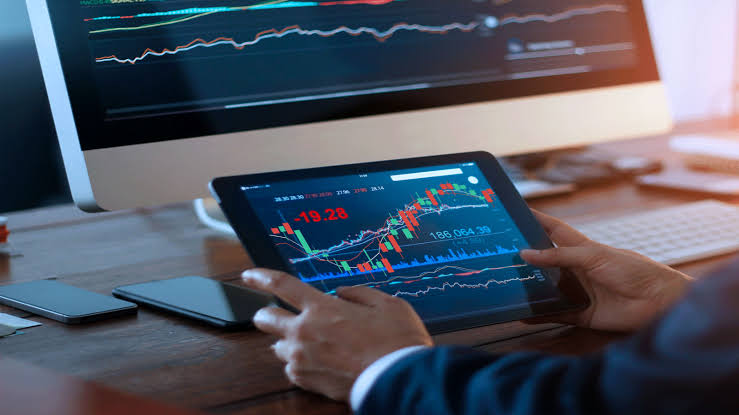
Online trading allows users to buy and sell market-linked securities through a digital platform such as a mobile app or website. It has made stock market access faster because users can place orders, track prices, review holdings, and download reports without visiting a physical branch.
However, online trading should not be treated as an easy route to quick profits. Market prices can move sharply due to company results, news, economic changes, global events, interest rates, and investor sentiment. Anyone using online trading platforms should understand account setup, order types, charges, research methods, and risk control before placing trades.
What Is Online Trading
Online trading means buying or selling securities through an internet-based broker platform. These securities may include shares, ETFs, bonds, derivatives, commodities, or other eligible products, depending on the platform and account access.
When a user places an order online, the broker sends the order to the stock exchange. If the order matches with another buyer or seller, the trade is executed. For delivery-based transactions, securities are later credited to or debited from the demat account after settlement.
Online trading gives users control over market activity, but it also requires discipline and responsibility.
How Online Trading Works
Online trading works through a connected system of users, brokers, stock exchanges, depositories, and banks.
Account Login
The user logs in to the trading platform using secure credentials such as password, PIN, OTP, or biometric access.
Security Search
The user searches for a stock, ETF, or other available product.
Order Placement
The user selects buy or sell, enters quantity, chooses order type, and confirms the order.
Exchange Execution
The broker routes the order to the exchange for matching.
Settlement
After execution, funds and securities are settled as per applicable timelines.
Report Access
Users can view contract notes, ledgers, holdings, and transaction history digitally.
Basic Requirements For Online Trading
Before starting online trading, users need the right account setup and documents.
Common requirements include:
- PAN card
- Bank account
- Trading account
- Demat account
- Completed KYC
- Mobile number
- Email ID
- Secure internet connection
- Basic market knowledge
- Understanding of risks and charges
A trading account is used to place orders, while a demat account stores securities electronically after delivery-based transactions.
Important Order Types In Online Trading
Order types help users control how trades are placed and executed.
Market Order
A market order executes at the best available price. It may execute quickly, but the final price can differ during fast movement.
Limit Order
A limit order allows users to set a specific price. The order executes only if the market reaches that price.
Stop-Loss Order
A stop-loss order helps reduce losses if the price moves against the trade.
Intraday Order
An intraday order is used when the position must be closed on the same trading day.
Delivery Order
A delivery order is used when the investor wants to hold the security beyond the same day.
Why Account Setup Matters
In the middle of starting online trading, Demat Account Opening becomes important because delivery-based shares and ETFs need to be held electronically. Without a demat account, users cannot properly hold listed securities after settlement.
Before opening an account, users should compare brokerage, annual maintenance charges, DP charges, platform stability, customer support, and report availability. A smooth account setup can make trading and investing easier, but it should be selected after checking long-term usability, not only quick onboarding.
Benefits Of Online Trading
Online trading can offer several benefits when used responsibly.
Convenient Market Access
Users can access markets through a mobile phone or computer.
Faster Order Placement
Orders can be placed quickly during market hours.
Better Control
Users can decide order type, quantity, price, and timing.
Portfolio Visibility
Holdings, gains, losses, and account reports can be reviewed digitally.
Market Awareness
Charts, alerts, watchlists, and news can help users stay informed.
Digital Records
Contract notes, ledgers, and transaction statements can be downloaded online.
Risks Of Online Trading
Online trading carries risk because market movement is uncertain.
Market Volatility
Prices can rise or fall quickly due to news, earnings, global events, or investor sentiment.
Overtrading
Easy access may encourage frequent buying and selling.
Emotional Decisions
Live price movement can create fear, greed, or panic.
Technical Issues
Slow internet, app downtime, or order delays can affect trading.
Wrong Order Entry
Incorrect quantity, price, or order type can create losses.
Margin Risk
Using leverage without understanding it can increase losses quickly.
Charges To Check Before Trading
Every trade may include different charges. These costs can reduce net returns.
Common charges include:
- Brokerage
- Securities transaction tax
- Exchange transaction charges
- GST
- Stamp duty
- SEBI charges
- Depository participant charges
- Account maintenance charges
- Call and trade charges
- Platform charges, if applicable
Frequent traders should be especially careful because repeated charges can reduce overall profitability.
Research Before Placing Trades
Online platforms make trading fast, but research should come before execution. Users should not place orders only because a stock is trending or someone recommended it.
Before trading, users should check:
- Market direction
- Stock price trend
- Trading volume
- Recent company news
- Sector performance
- Support and resistance levels
- Risk-reward ratio
- Stop-loss level
- Charges
- Exit plan
For long-term delivery trades, users should also check company fundamentals, debt, valuation, and business quality.
Common Mistakes To Avoid
Many beginners make mistakes while using online trading platforms.
Trading Without A Plan
Every trade should have a clear reason, entry price, exit level, and risk limit.
Ignoring Stop Loss
A stop loss can help reduce damage when a trade moves against expectations.
Following Random Tips
Tips may not match personal capital, goals, or risk appetite.
Using Large Positions Too Early
Beginners should avoid taking large exposure before gaining experience.
Checking Prices Constantly
Overchecking can lead to emotional decisions and unnecessary trades.
Ignoring Reports
Users should review contract notes, ledgers, and charges regularly.
Online Trading For Beginners
Beginners should start slowly. They can first observe price movement, create watchlists, understand order types, and learn how settlement works. Starting with small amounts can help users understand the process without taking unnecessary risk.
New users should avoid margin, derivatives, and high-frequency trading until they understand the risks. They should also separate trading capital from emergency funds and long-term savings.
Online trading becomes more useful when learning comes before action.
Platform Safety For Online Trading
Since online trading connects to money and securities, account safety is important.
Users should:
- Use strong passwords
- Enable two-factor authentication
- Avoid public Wi-Fi
- Download only official apps
- Never share OTPs
- Review login alerts
- Keep contact details updated
- Use official customer support
- Logout from shared devices
- Check statements regularly
Good security habits can help protect account access and reduce misuse risk.
Using Research Tools For Better Market Decisions
A Stock Analysis App can help users review charts, company data, price trends, financial ratios, news, and market signals before placing trades. Such tools can support better research when used correctly.
However, analysis tools should not be treated as guaranteed prediction systems. Users should combine data with risk control, position sizing, and personal judgement. Better decisions come from preparation, not from relying on one signal or app feature.
Conclusion
Online trading has made market access faster and more convenient. Users can place orders, track prices, review holdings, and download reports through digital platforms. This can support both investors and traders when used carefully.
However, online trading also carries risk. Beginners should understand account setup, order types, charges, research, platform safety, and stop-loss usage before trading actively. A disciplined approach can help users manage market participation with better control.
FAQs
What Is Online Trading
Online trading means buying and selling securities through an internet-based trading platform or broker app.
What Accounts Are Needed For Online Trading
Users generally need a trading account, demat account, bank account, PAN, and completed KYC.
Is Online Trading Risky
Yes, online trading is risky because market prices can move up or down and losses can occur.
What Is A Limit Order
A limit order lets users set a specific price for buying or selling a security.
Should Beginners Start Online Trading
Beginners can start after learning market basics, order types, charges, risks, and account safety.
How Can I Trade Online Safely
Use secure platforms, strong passwords, two-factor authentication, proper research, stop loss, and sensible position sizes.







Leave a Reply